NEW COLLECTION MINOTOR 2.0
Search Diacasan
Press Enter to see results. Esc to close.
Récits, savoir-faire, conseils
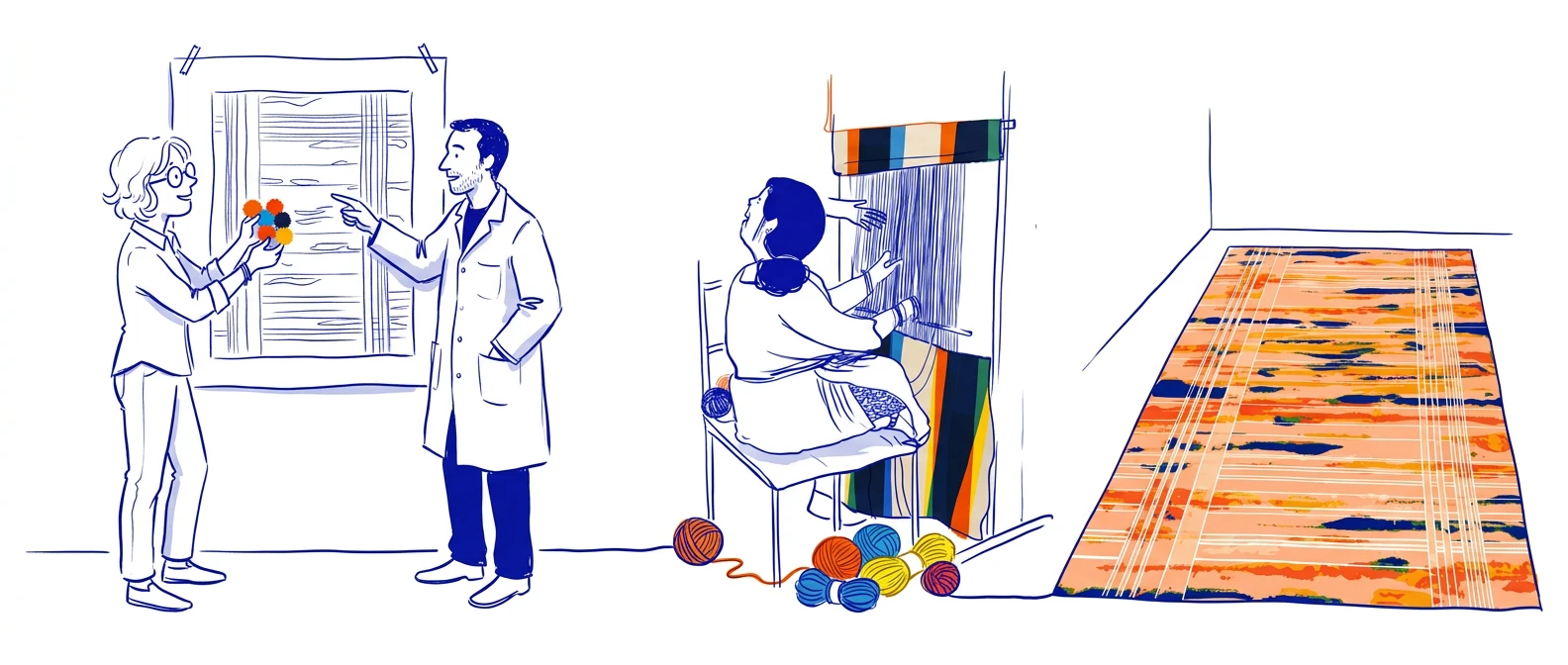
Ce qui se passe entre le dessin et le tapis.
What a made-to-measure rug means at a publisher, how it is decided at the showroom, approved on a final proof and made in Nepal or India.
Knot after knot on a loom, or wool shot through a stretched canvas: we publish both techniques, and each lends a rug its own bearing, suppleness and lead time.
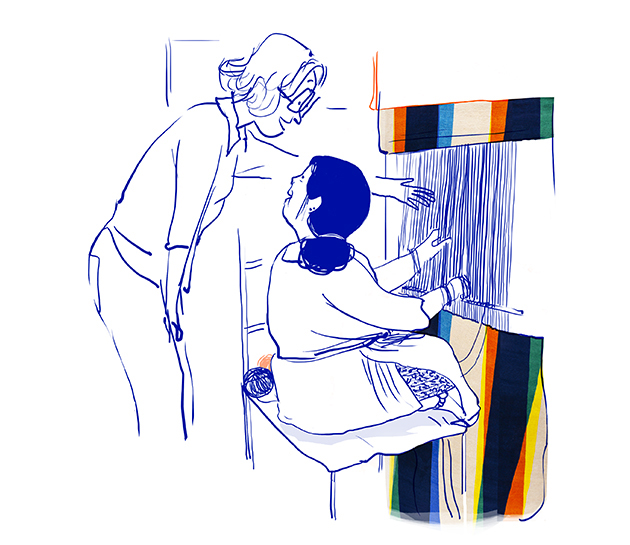
A hand-spun wool, dyed skeins, a loom, then water, the scraper and the frame: the journey of a rug knotted in Nepal, as we follow it with our workshop.
Spun by hand in the highlands, or of a whiteness that forgives nothing: why we knot Himalayan wool in Nepal and tuft New Zealand wool in India.
Turning back a corner, following a fringe, folding the rug between the hands: the simple gestures that let one recognise a handmade rug, and tell a knotted rug from a tufted one.
The word belongs to waxed furniture and bronze. It also suits the hand-knotted rug, when its wool is living and well treated: what time gives it, and what turns it grey.
Behind the name vegetable silk, viscose is most often hidden. The nature of the fibres, how they hold underfoot, their care: what sheen changes in a knotted or tufted rug.
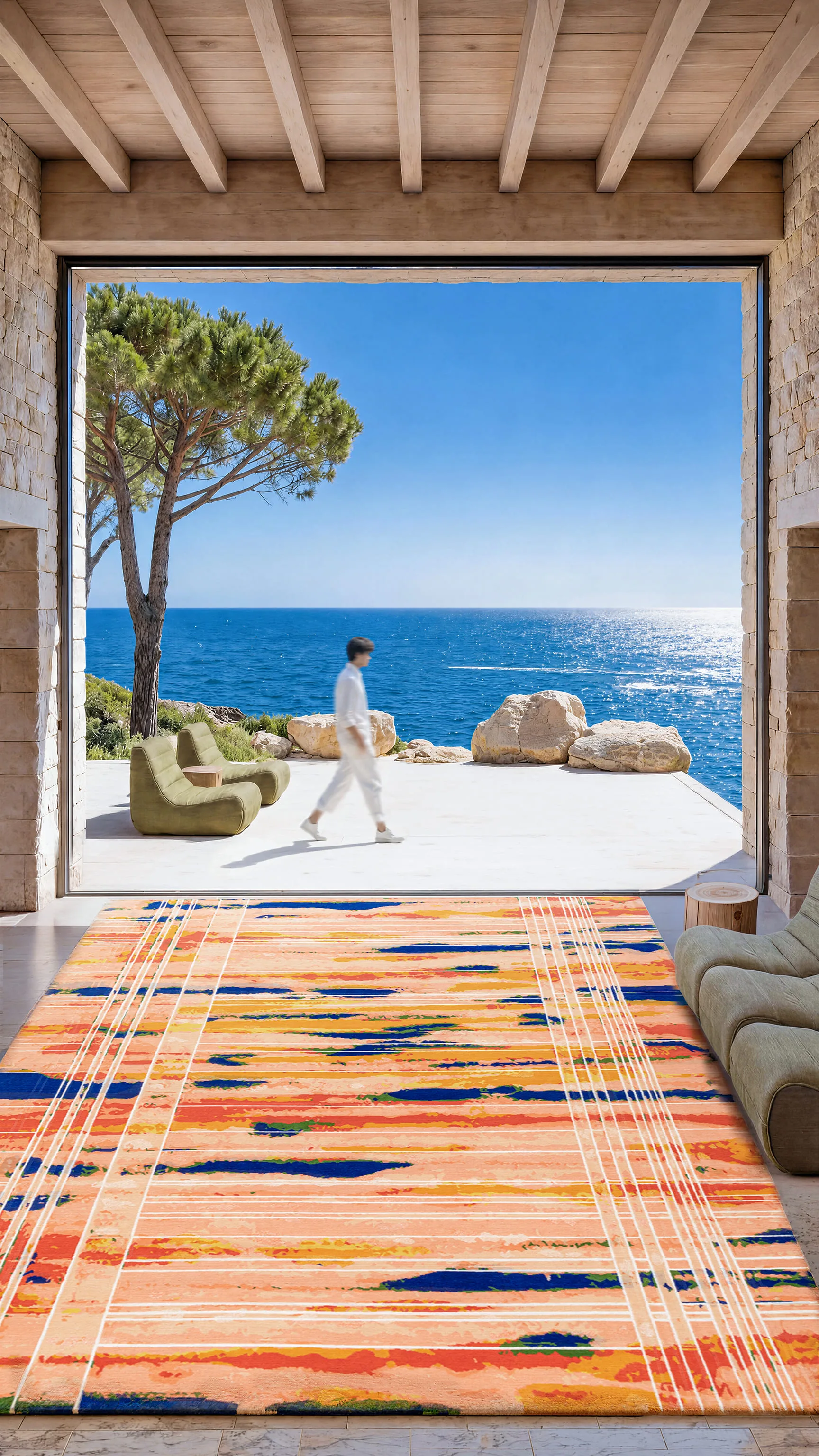
The drawing of MINOTOR returns with another depth. What relief changes to a graphic motif, how it is made, and why it looks different at every hour.
From the seating area traced on the floor to the large formats knotted in Nepal and tufted in India, the method for choosing the size of a rug, and the drawings that impose their own measure.
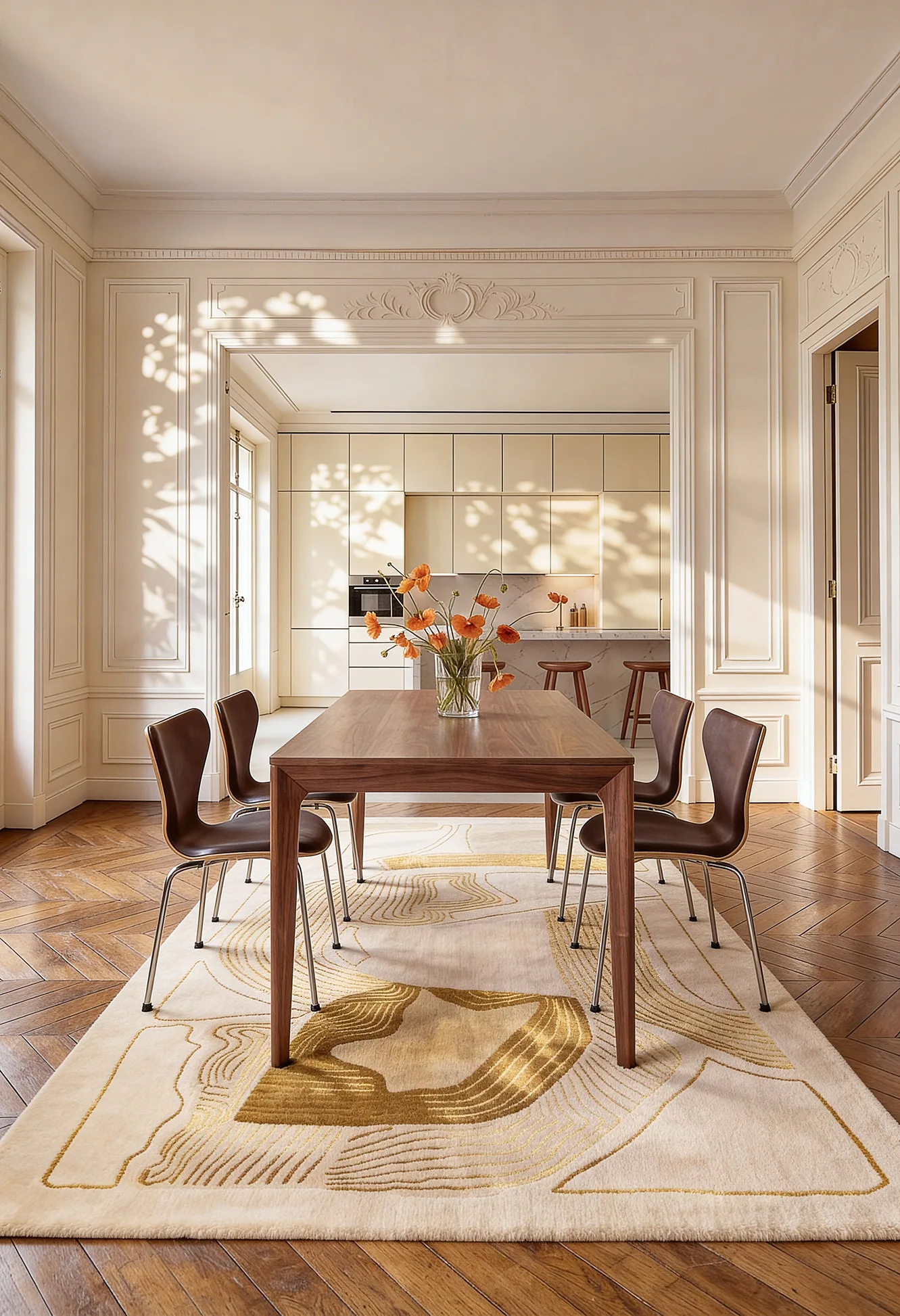
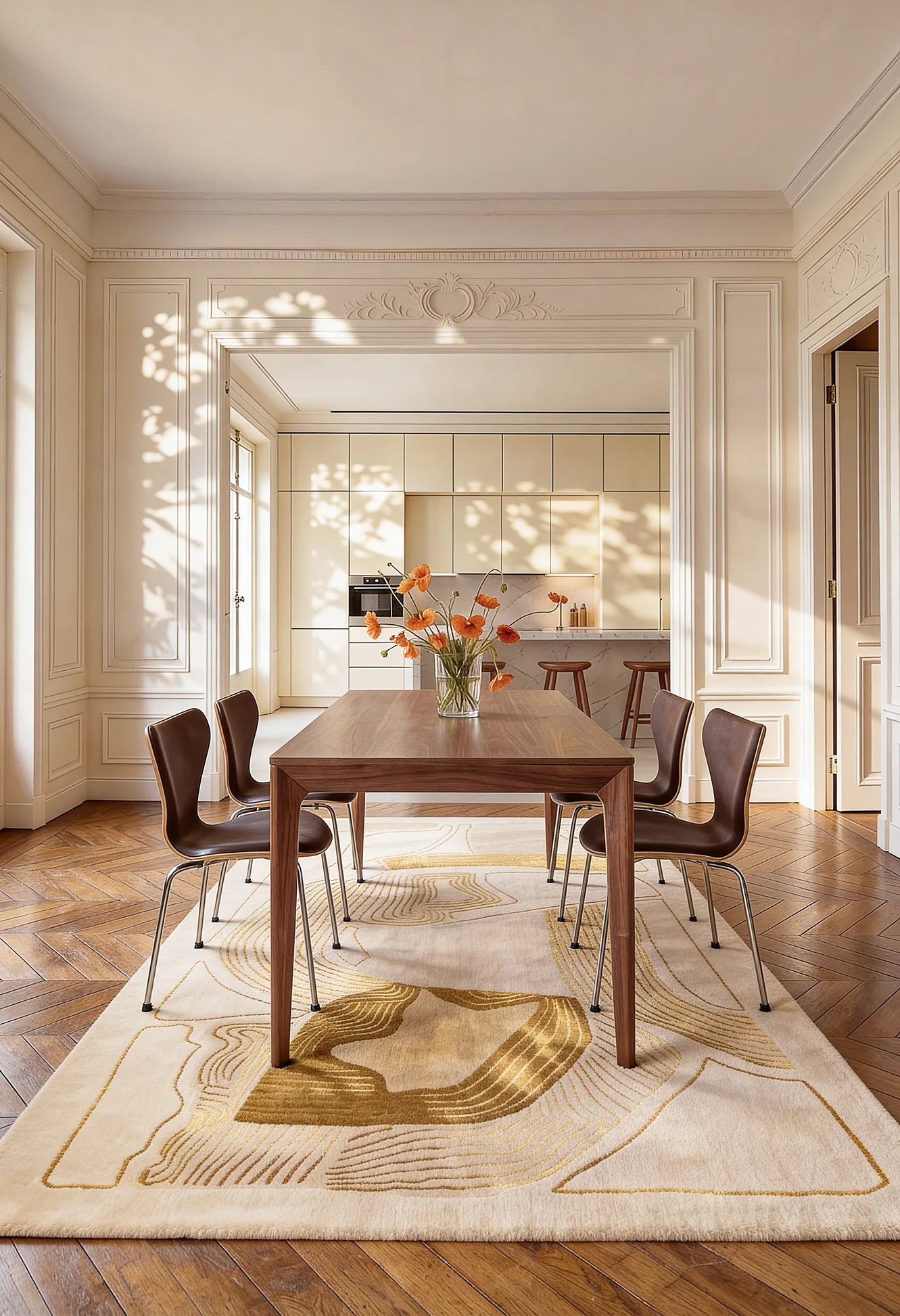
The margin to keep around the table, the calculations for round and rectangular tables, and what MINOTOR or CHAMP DE BLÉ teach about the rug laid beneath the dining table.
Placing the rug under the bed or at its foot, calculating the overhang according to the width of the bed, choosing the wool one will touch barefoot: the bedroom seen through our formats.
A width to respect, doors to leave free, compact formats for the entrance and hallways conceived as projects: how to choose the rug that receives the first step.
Felt, rubber, jute or foam: the underlay holds the rug to the floor and protects it from wear. What it does, how to choose it, and when it matters most.
Rug, underlay and parquet add up above underfloor heating. What manufacturers and laying rules say, and what to check before a project.
Vacuuming, stains, sunlight, washing: the gestures that preserve a wool rug, and what the workshop's work has already taught it to withstand before it reaches you.
Flakes of wool in the vacuum cleaner in the first weeks: where they come from, what they say about the rug, how long it lasts and how to accompany it.
From the auction record to the house's knotted pieces, what the price of a hand-knotted rug contains: time, wool, invisible finishing and the relationship with the workshop.
It has no story, says the woman who chose it. Yet the blue of the house is everywhere: on the rue du Bac window, in the cobalt of MINOTOR, against the white of GRAND NORD.
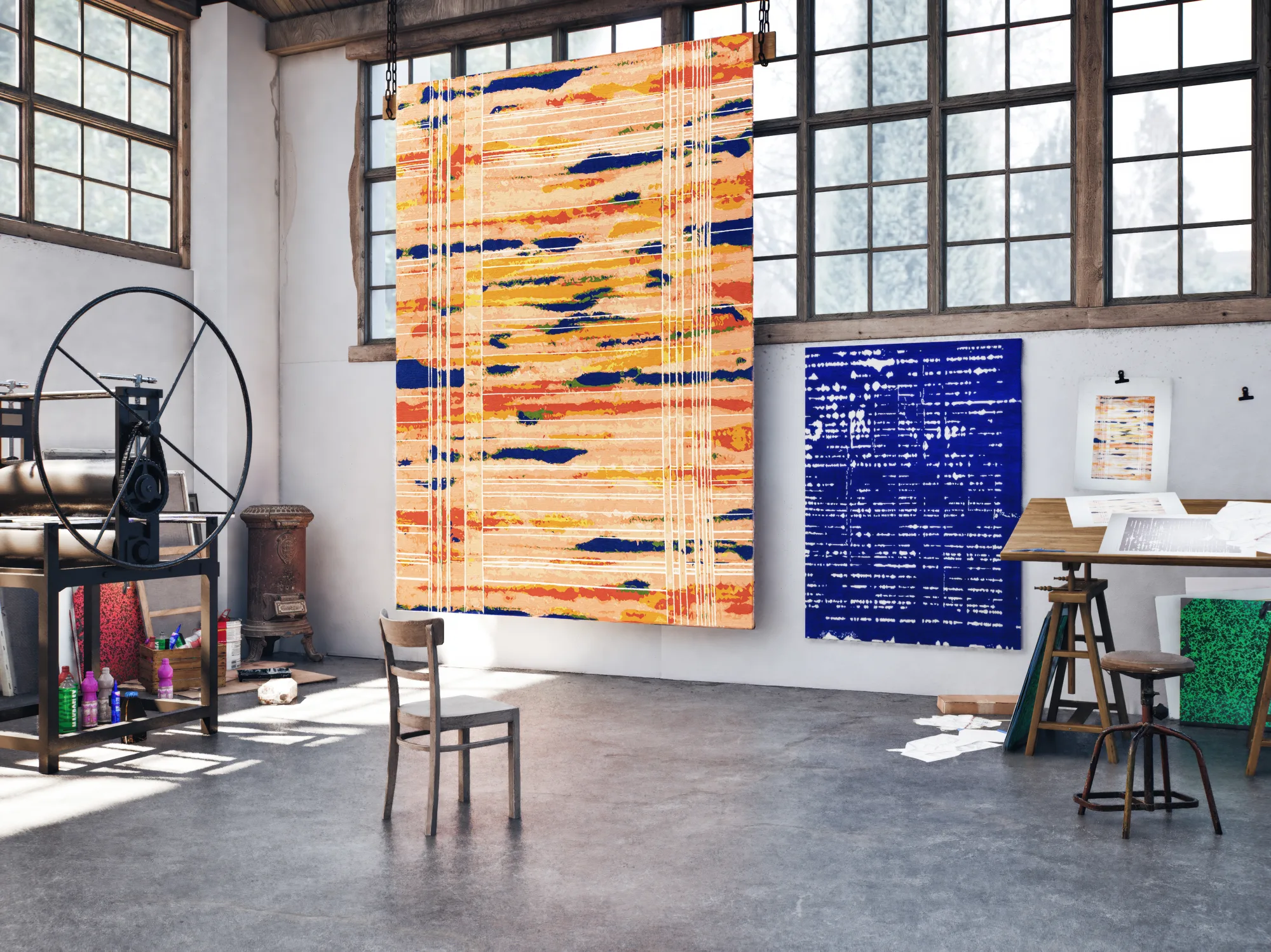
Christian Signorel draws flat, in pencil. His lines become MINOTOR, then its new version, where relief takes the place of dense colour. The hand holds the line.
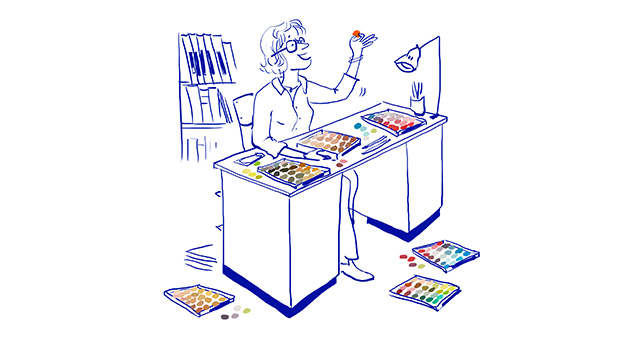
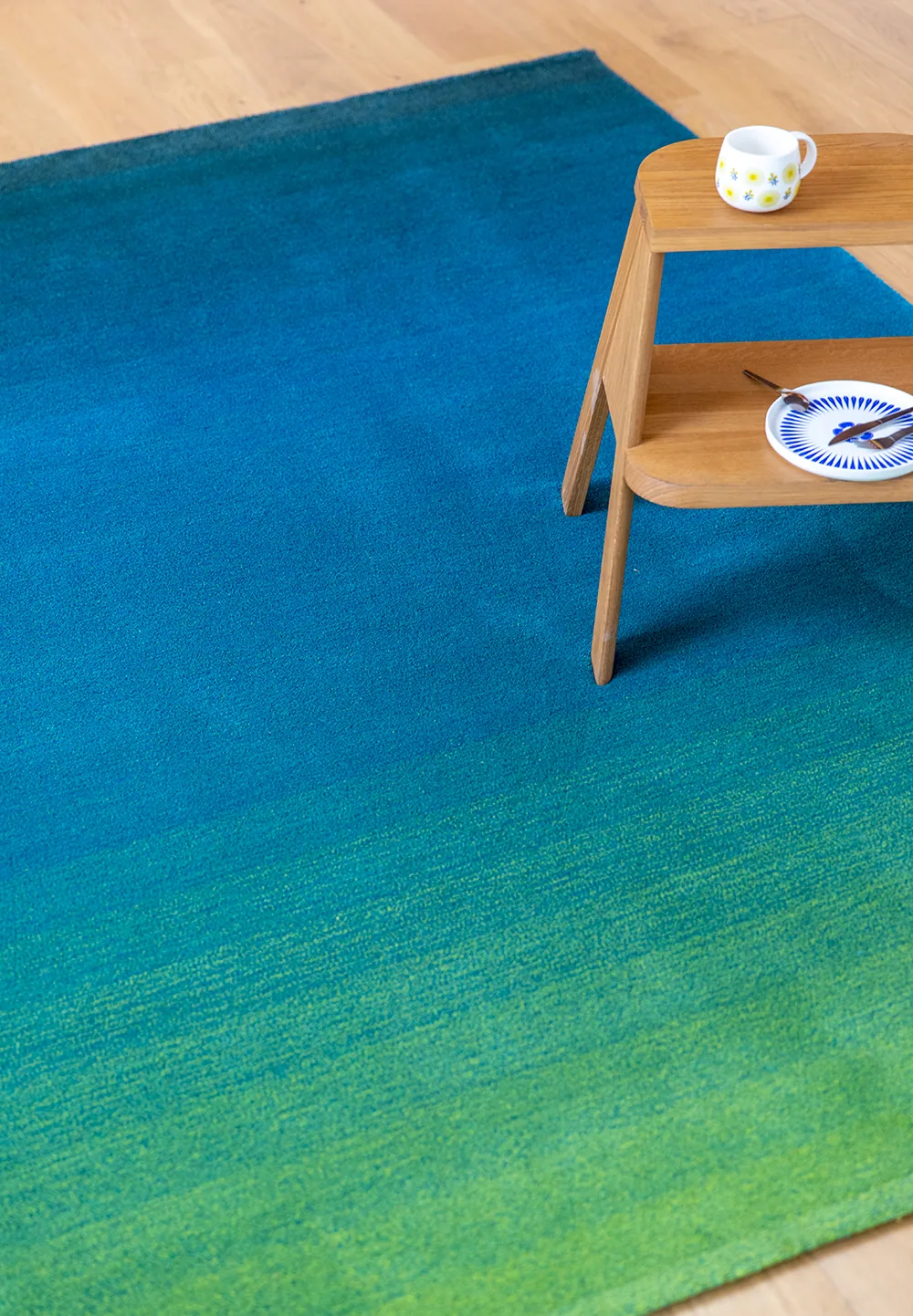
The light of the room, the purity of the wool, the palettes of our artists: how to choose the colour of a rug, from the green of SUR LE FIL to the stone tones of Christian Signorel.
The children called it the shop where the lady is. In our showroom, every piece hangs on the wall and is seen face on, like a painting. How to hang a rug without damaging it.
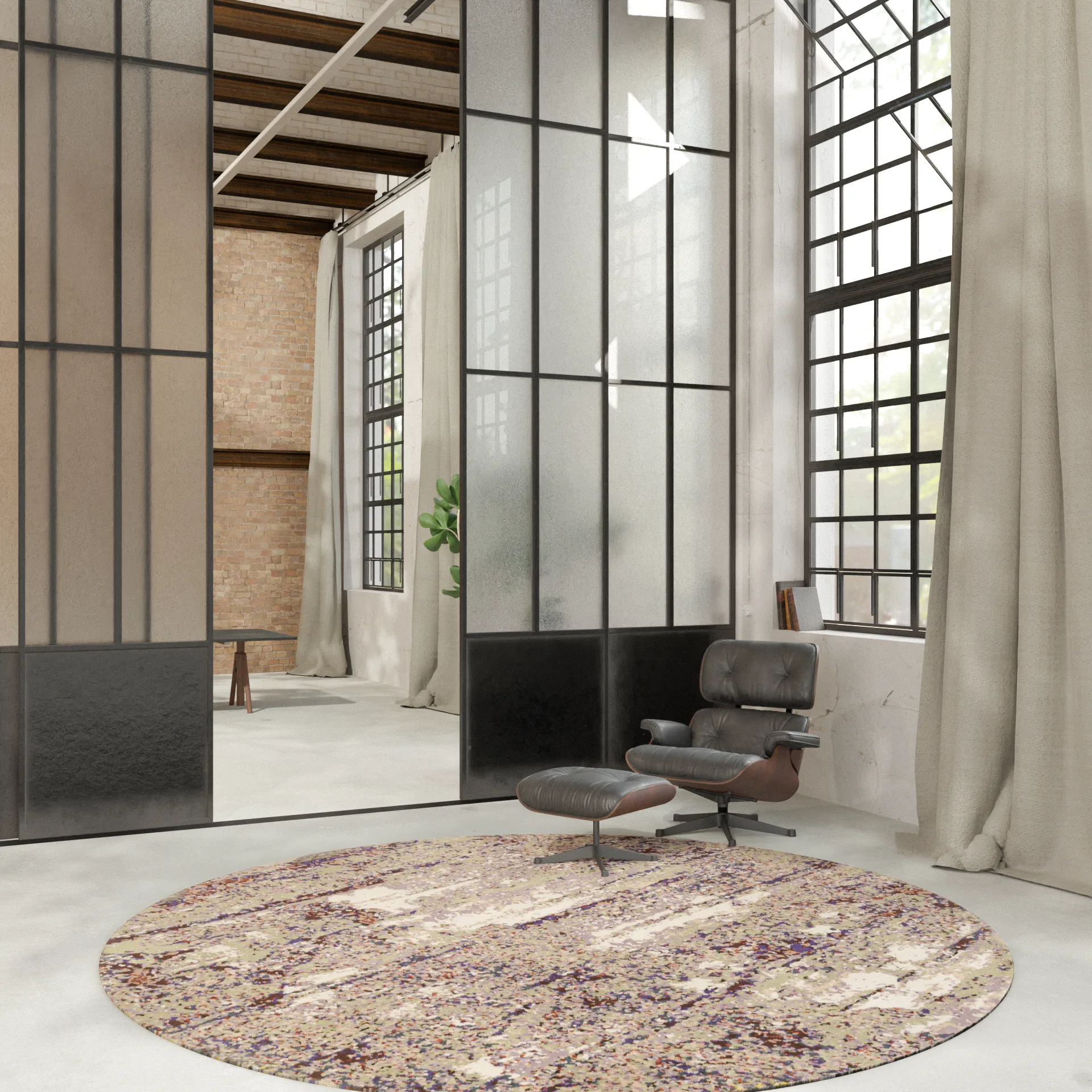
Jean-Paul Espinosa paints on the floor. From his canvases, we isolate fragments that the workshop translates into wool or Tencel. So were born The Rose, then Everglades and the PAINTINGS collection.
It all begins in the workshop: the wool is tousled, and in it one sees the bear. The story of GRAND NORD, from the Nanuk rug to the Iceberg armchair, between pure white and arctic blue.
Between an artist's drawing and the rug laid on the floor, there is a craft: publishing. What the house of Diacasan does, with which workshops, and what it changes for whoever chooses a piece.
In Nepal, workshops hand-knot a hand-spun Himalayan wool. Why the house sees there the Oriental rug of today, and what distinguishes a Nepalese rug from a Tibetan rug.
Entrusted to other workshops, the same drawing would yield other rugs. Technique, fibre, scale, wool colours: what the publisher decides between the artist's sheet and the finished piece.
From the oldest knotted rug to the commissions of Louis XIV and the rugs of avant-garde painters: how the Oriental rug prepared the artist's rug the house publishes today.
Hotel, restaurant, apartment: how an interior architect or a decorator undertakes a rug project with the house, from the choice of technique to the story it will tell their client.
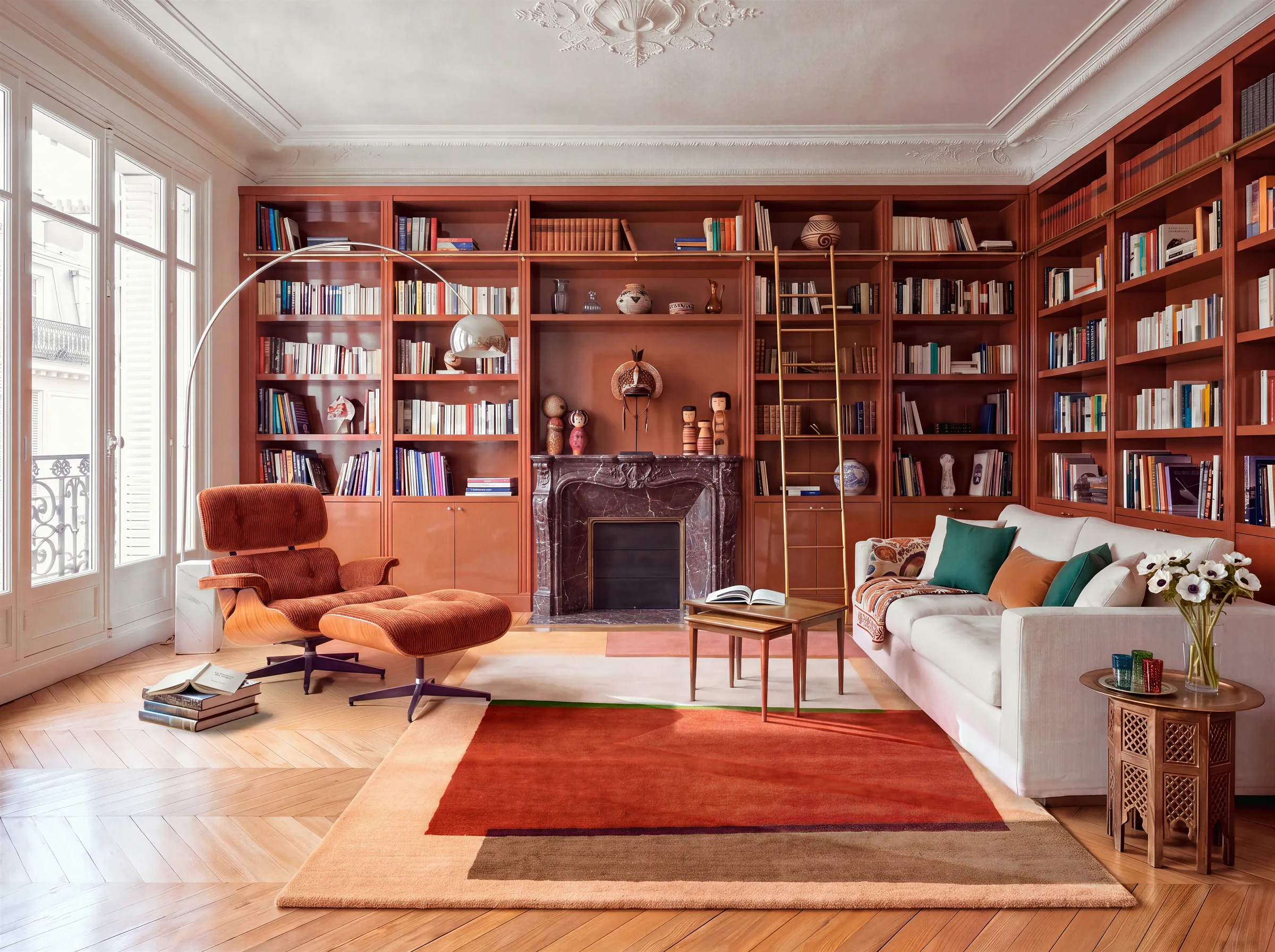
Period parquet, cognac leather armchairs, high mouldings: in a Left Bank Parisian apartment, a decorator chose a very colourful rug by Jean-Paul Espinosa. The story of a project.
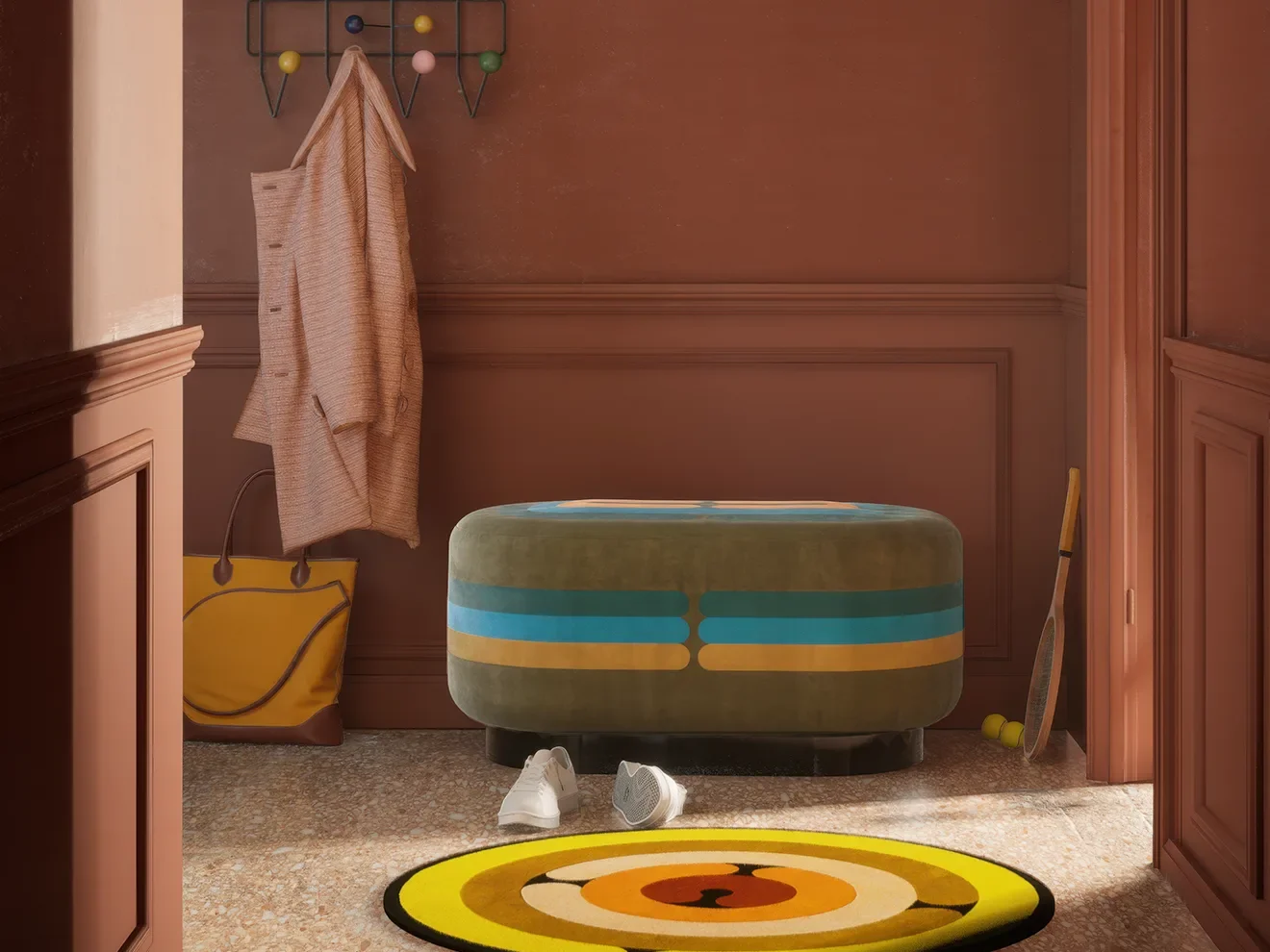
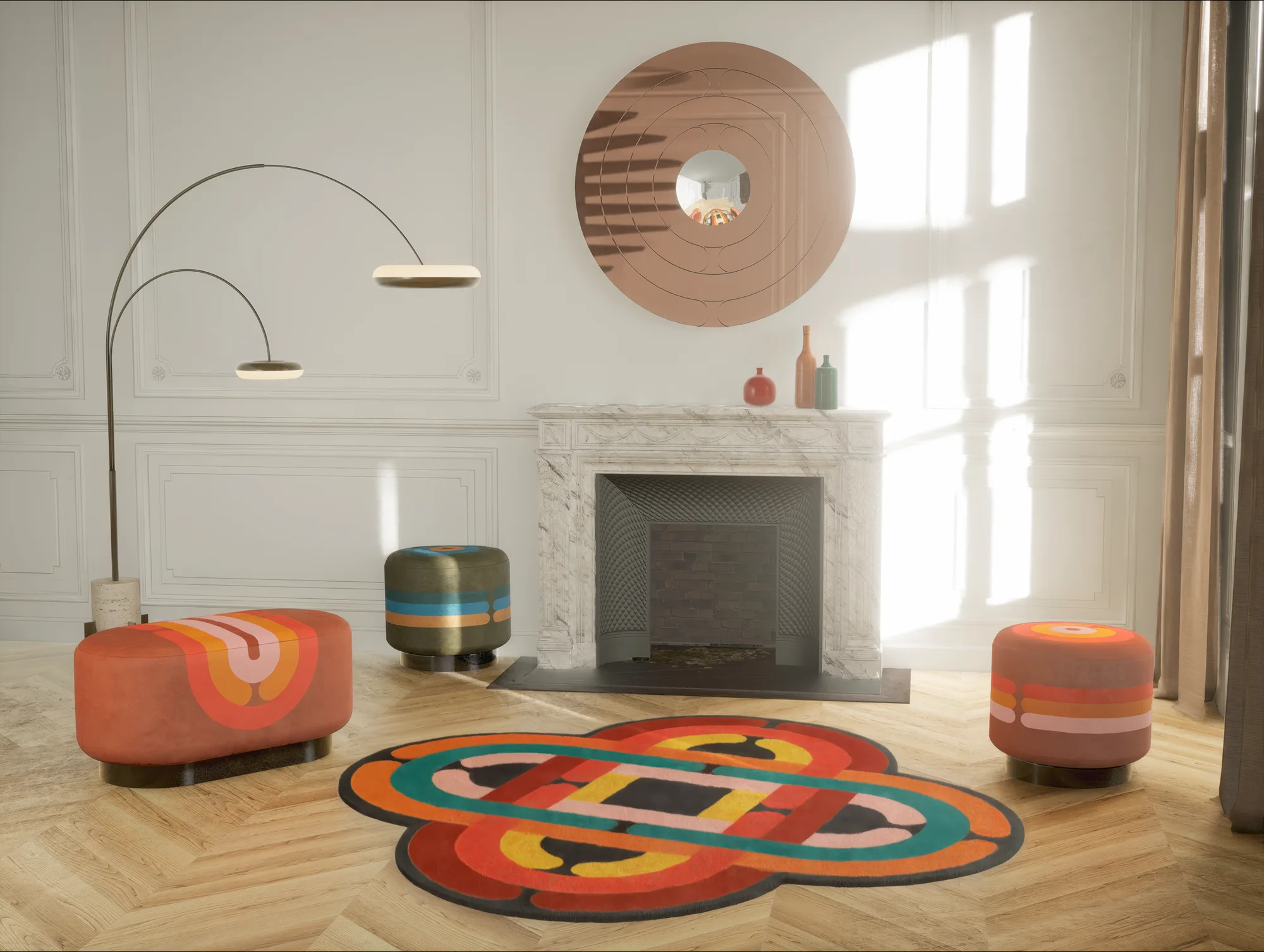
MINOTOR and BESTIAIRE poufs, the Iceberg armchair from GRAND NORD, double-sided cushions and Mircur mirrors: the pieces that take up the rug's design at the height of a seat or of the gaze.
Every January, Paris gathers the world of interior design: the showrooms of Paris Déco Off and the Maison&Objet fair, in the same week. Dates of the next edition, neighbourhoods and markers for planning.
Some fifteen stages, twenty-five years of workshops, a single arbiter: the material. Hand-knotting explained by Sandrine Demas.
Sandrine Demas puts it simply: the common denominator of the Diacasan artists is colour. A chromatic journey in four signatures.
Renaud Allirand is an engraver. Sandrine Demas waited for the right moment. His rugs keep the rigour of the engraved plate.
In the world of interior design, people readily speak of 'scouting'. Sandrine Demas does not audition. She meets.