
Material as compass: the hand-knotted style according to Diacasan
Some fifteen stages, twenty-five years of workshops, a single arbiter: the material. Hand-knotting explained by Sandrine Demas.
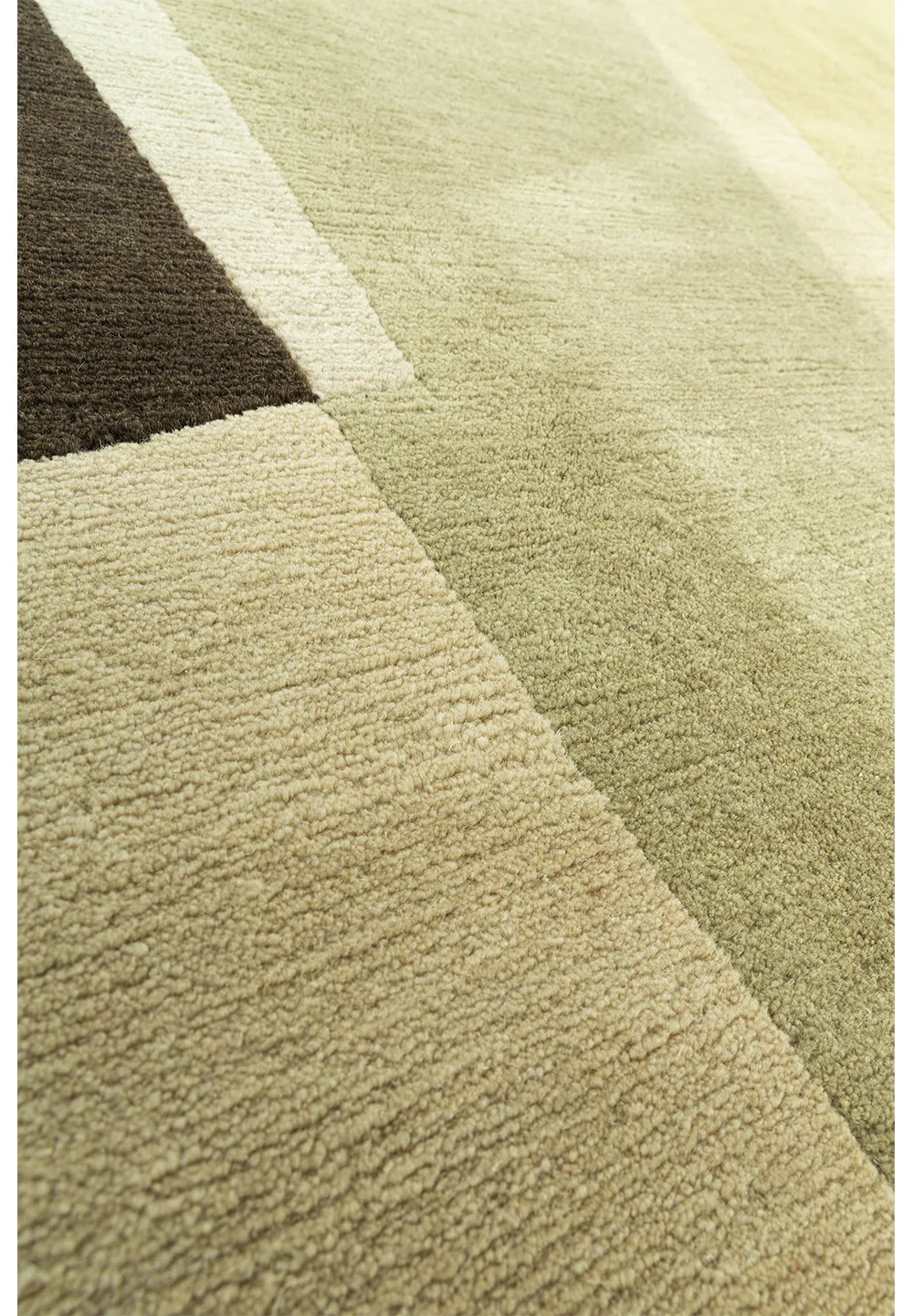
There are houses that speak of style as a result. A fine silhouette, a true colour, a bearing. At Diacasan, style is a point of departure. But it is not a style of image: it is a style of material.
It all begins with a simple scene. A sample is passed around. The hand crumples it, strokes it, lingers. At that instant, the rug ceases to be an object one looks at: it becomes once again an object one feels. That is when the phrase falls, almost like a rule: material does not lie.
Touching, before telling
Material, here, is not an argument. It is a language. A thread that catches or glides. A density felt underfoot. A pile that absorbs sound as a curtain captures light. One can look for a long time. One must touch to understand.
Because a rug is not a surface. It is a sum of decisions.
The sum of decisions
As soon as one takes material seriously, every detail becomes a choice: the wool and its character, the preparation, the dyeing, the density, the relief, the cut, the finishing, the lead time.
One can draw an intention. Then it must be made to hold in reality. That is where the Diacasan style is played out: in this way of never cheating with what will be seen later.
Two tempos, one arbiter
The story then divides into two rhythms.
Knotting first. The long tempo. The one that obliges one to wait, to trust the process, to accept that a piece takes months as the formats grow. Knotting gives suppleness, depth, a way of ageing. Sandrine Demas uses a word one rarely hears in interior design: patina.
Tufting next. Quicker, more accessible, more agile when commercial reality and calendar constraints enter the story. It is not a concession. It is another cadence.
In both cases, the arbiter is the same: the material.
Knotting, like an Oriental rug
Sandrine Demas has a very simple way of bringing knotting back to the essential: she says “like an Oriental rug”. Not to exoticise, but because the image is immediate. One grasps at once the knotted point, the long tempo, the density.
When she goes back as far as the Gobelins, the gesture is the same: to recall that this craftsmanship is not a postcard, but a technique. So much so that France, too, wished to make it its own.
She remembers an image, under the glass roof of the Grand Palais in early February 2026: the monumental rugs commissioned by Louis XIV for the Grande Galerie of the Louvre had been unfurled like a floor rediscovered. Woven at the Savonnerie after the commission entrusted to Charles Le Brun, they had been conceived for the Louvre, then set aside when Versailles took the stage.
Under the glass roof, these rugs do not tell of Louis XIV. They make visible the logic of knotting. The excess of scale, the long tempo, the layering of gestures. A floor that demands one submit to it, rather than asking it to hurry.
What material does not forgive
There are mistakes that cannot be seen on the day of delivery. They appear later.
Sandrine Demas speaks of “dead wools”: those rugs which, after a few months, turn grey as if the colour were dying out. It is not a whim of the light, it is a symptom. The fibre was not alive, or the compromise was made too early.
In this craft, price is never neutral. It always ends up showing.
That is also why she returns so often to the word style. Not style as decor, but as consequence: that moment when the eye recognises, without needing an explanation, that here the material has been respected.
The ballet of invisible stages
And then there is what clients almost never see: making as choreography. In knotting, the piece is not “finished” when it leaves the loom. It is washed. Scraped. Turned. Laid out, stretched, stabilised. Some fifteen stages, sometimes more.
This work does not display itself. It gives the rug its bearing. That quiet self-evidence one recognises without being able to name it.
Another founding scene: the first journey to Nepal. A harsh country, a discouraging arrival, then the encounter with “the key workshop”. In a courtyard, folded rugs. Sandrine Demas recognises the ones she was already selling, the ones she had been looking for without believing she would find them. “This is it,” she tells herself. It is in this kind of instant, a material seen, touched, recognised, that a house is built.
A publishing house, in the strict sense
That is why Diacasan lays claim to the word publishing.
To publish is not to pile up references. It is to choose, to rank, to refuse.
To refuse a wool that is too soft. To refuse a white that yellows. To refuse a workshop that has become too much of a factory. To refuse shortcuts.
In the end, style according to Diacasan lies in this discipline: letting the material decide. And never contradicting it.