
The encounter as method: how Sandrine Demas chooses her artists
In the world of interior design, people readily speak of 'scouting'. Sandrine Demas does not audition. She meets.
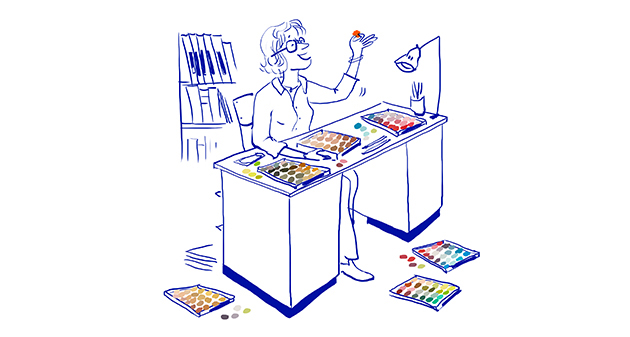
In the world of interior design, people readily speak of "scouting", as if creators were territories to be mapped, profiles to be qualified. Sandrine Demas, founder of Diacasan, has never worked that way. For her, an artist is not identified: an artist is met. And the nuance is immense.
There is a scene Sandrine Demas recounts with the precision of someone who has not forgotten it. A Maison & Objet fair. A stand. A man whose work stops her in her tracks. The conversation that followed did not last long, but the next day she was in Lyon.
This is how Jean-Paul Espinosa enters the story of Diacasan. Not through an application, a portfolio sent, a carefully worded recommendation. Through a presence, first. And through the immediate, almost instinctive decision to go and look more closely.
Scenes, not files
Each collaboration has its own dramaturgy. With Emmanuel Thibault, the story begins not at a fair but on a photo shoot. With Christian Signorel, he pushes open the door of the shop. With Renaud Allirand, there is first an encounter, then years of silence, then an exhibition at the château de Tours. Time itself is part of the protocol.
Holding over the long term
Perhaps this is where the true singularity of the Diacasan method lies: it does not think of collaboration as an episode, but as a trajectory. One does not work with an artist for a collection; one begins a story whose ending is not yet known. We commit for the long term, Sandrine likes to repeat. The phrase is sober. Yet it says everything.